
Review of the BBC’s new Evolution Series
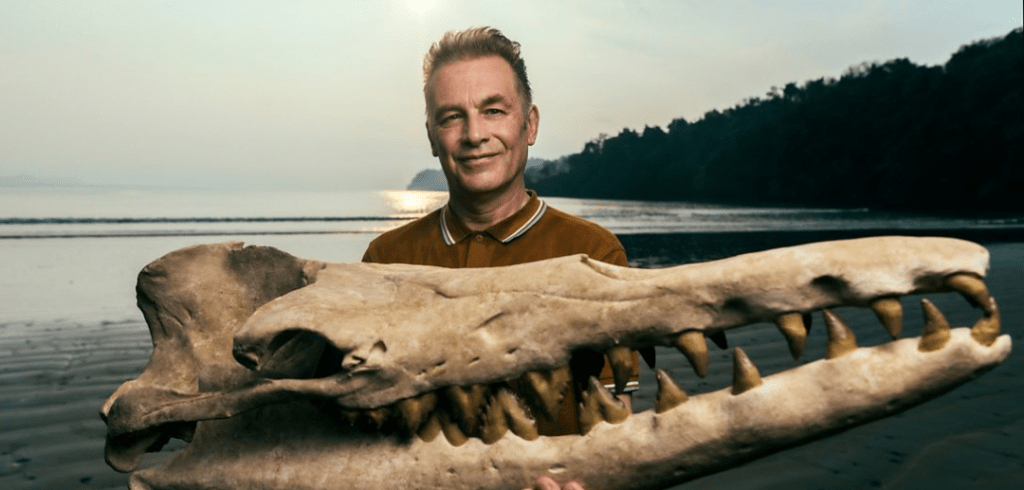
For me, this is yet another landmark series from the BBC, well up to the excellent standards we have become used to on the world-leading Attenborough programs. Chris Packham, as presenter, more than equals David’s enthusiasm and child-like wonder at the natural world and how it has evolved. This to me is a vital part of the enjoyment of all of these programs. They are not just a science lesson; they aim to capture not just our minds, but our hearts and to reconnect us at a deeper level of what it means to be alive and wholly conscious.
And the science is pretty good too! Without getting bogged down in too many technical terms, the research and investigations underpinning the data presented is cutting edge: so much in these programs is new to me. We are provided with palaeontology evidence, shown a timeline in millions or billions of years with intriguing references to species still alive today.
Each episode starts with a different modern-day animal and asks ‘how did it come to be’ the way it is? ‘Why is the elephant so big?’ for example, in episode 1. I’ve waited until episode 4 before reviewing the series because in this edition the theme is intelligence and how that has evolved over the millennia. Thankfully the focus is not on humans but on dolphins. I am eternally grateful to the BBC via David Attenborough and Chris Packham for illustrating so wonderfully how intelligent other creatures are and for reminding us just how amazing the brains are not just of apes but of dolphins and other creatures. If there is one thing that comes across very strongly through these programs it is how we are far more alike other members of the animal kingdom than we are different, how we have come from the same distant ancestors and share so many of the same genes, and so similar features … such as eyes (I will not spoil this review by listing some of the other, perhaps surprising, ones).
Not surprisingly the camera work focussing on modern-day creatures is stunning, providing an important real life element. Some might say that the computer graphics, of how long extinct species may have looked, are not as real looking as they might be. But to me, the balance is right. These simulations are just that: we don’t know what they actually looked like. It would be misleading to use photo-realistic imagery here.
The idea of mutation appears fairly regularly since that, fundamentally, is at the heart of how a given species evolves. Some amazing examples of how one very minor random change all those eons ago has resulted in some of the key features that we see in the birds and mammals of today’s world. That, to me, prompts the question ‘but what causes that mutation?’ might it not be random but caused by some intelligence, evolving Cosmic Consciousness?
But that is a subject for this website … and perhaps a future BBC series …

